Judge to Preside Over Border Wall Case Two Years After Trump Attacked His Mexican Heritage
hmmmm
What goes through my my mind when I read the news with my morning coffee. …Or for the Simon's Rockers in the group, this is my response journal.

From the trade’s beginning in the 16th century to its conclusion in the 19th, slave merchants brought the vast majority of enslaved Africans to two places: the Caribbean and Brazil. Of the more than 10 million enslaved Africans to eventually reach the Western Hemisphere, just 388,747—less than 4 percent of the total—came to North America. This was dwarfed by the 1.3 million brought to Spanish Central America, the 4 million brought to British, French, Dutch, and Danish holdings in the Caribbean, and the 4.8 million brought to Brazil.
…By the conclusion of the trans-Atlantic slave trade at the end of the 19th century, Europeans had enslaved and transported more than 12.5 million Africans. At least 2 million, historians estimate, didn’t survive the journey.
Animated interactive of the history of the Atlantic slave trade.
Worth the click, the visual is in-tense.
I knew the price of my new home in Kirkwood, just not what it would cost the neighbors who’d lived there for generations
How gentrification really changes a neighborhood – Atlanta Magazine
hmmmm
King visited Hawaii a number of times during his life. Just a year before the Selma marches, he spoke at a Honolulu conference for the Hawaii State Human Rights Commission—the first committee of its kind in the United States—of which Rev. Akaka was a board member. King found the Islands’ multiethnic population and everyday society to be an inspirational source of “racial harmony” as the struggle of African Americans made headlines across the continental U.S.
…”As I think of the struggle that we are engaged in in the South land, we look to you for inspiration and as a noble example, where you have already accomplished in the area of racial harmony and racial justice, what we are struggling to accomplish in other sections of the country, and you can never know what it means to those of us caught for the moment in the tragic and often dark midnight of man’s inhumanity to man, to come to a place where we see the glowing daybreak of freedom and dignity and racial justice.”
Why Martin Luther King Jr. wore a Hawaiian lei on Selma march | Hawaii Magazine
hmmm
Meeting with the analyst as part of a briefing on a family being released by militants in Pakistan, [Trump asked] her where she was from.
“New York,” she replied.
Trump pressed on, asking her where “her people” are from.
When the analyst responded that her parents were from South Korea, the president reportedly responded by asking a nearby adviser why the “pretty Korean lady” was not negotiating with North Korea’s government on behalf of the Trump administration.
The analyst, whose name was not released, is reportedly trained in hostage negotiation, not diplomacy.
Trump questioned why ‘pretty Korean lady’ analyst wasn’t working on North Korea: report | TheHill
It was just after President Trump had finished railing in the Oval Office against African immigrants he said came from “shithole countries” when a senior Republican senator, Lindsey Graham of South Carolina, who was there to negotiate a deal on immigration, spoke up.
“America is an idea, not a race,” Mr. Graham said, according to three people familiar with the exchange on Thursday. Diversity was a strength, he said, not a weakness. And by the way, the senator added, he himself was a descendant of immigrants who came to the United States from “shithole countries with no skills.”
A Senior Republican Senator Admonishes Trump: ‘America Is an Idea, Not a Race’ – The New York Times
hmmmm
She’d lost her driver’s license a few days earlier, but she came prepared with an expired Wisconsin state ID and proof of residency. A poll worker confirmed she was registered to vote at her current address. But this was Wisconsin’s first major election that required voters—even those who were already registered—to present a current driver’s license, passport, or state or military ID to cast a ballot. Anthony couldn’t, and so she wasn’t able to vote.
The poll worker gave her a provisional ballot instead. It would be counted only if she went to the Department of Motor Vehicles to get a new ID and then to the city clerk’s office to confirm her vote, all within 72 hours of Election Day. But Anthony couldn’t take time off from her job as an administrative assistant at a housing management company, and she had five kids and two grandkids to look after. For the first time in her life, her vote wasn’t counted.
…“I felt like the right to vote was being stripped away from me.”
…Clinton’s stunning loss in Wisconsin was blamed on her failure to campaign in the state, and the depressed turnout was attributed to a lack of enthusiasm for either candidate.
…The impact of Wisconsin’s voter ID law received almost no attention. When it did, it was often dismissive.
…Voter suppression efforts were practically ignored, when they weren’t mocked.
…when the measure was challenged in court, the state couldn’t present a single case of voter impersonation that the law would have stopped. “It is absolutely clear that [the law] will prevent more legitimate votes from being cast than fraudulent votes,” Judge Lynn Adelman wrote in a 2014 decision striking down the law. Adelman’s ruling was overturned by a conservative appeals court panel.
…After the election, registered voters in Milwaukee County and Madison’s Dane County were surveyed about why they didn’t cast a ballot. Eleven percent cited the voter ID law and said they didn’t have an acceptable ID; of those, more than half said the law was the “main reason” they didn’t vote.
…Its impact was particularly acute in Milwaukee, where nearly two-thirds of the state’s African Americans live, 37 percent of them below the poverty line.
…A post-election study by Priorities USA, a Democratic super-PAC that supported Clinton, found that in 2016, turnout decreased by 1.7 percent in the three states that adopted stricter voter ID laws but increased by 1.3 percent in states where ID laws did not change. Wisconsin’s turnout dropped 3.3 percent. If Wisconsin had seen the same turnout increase as states whose laws stayed the same, “we estimate that over 200,000 more voters would have voted in Wisconsin in 2016,” the study said. These “lost voters”—those who voted in 2012 and 2014 but not 2016—”skewed more African American and more Democrat” than the overall voting population.
…Under the terms of a court order resulting from ongoing litigation over the voter ID law, within six business days the DMV should have given Moore a credential he could use for voting. Instead, a clerk told him to go down to Illinois, get his birth certificate, and come back to the DMV. That would cost Moore money he didn’t have. If he entered Wisconsin’s ID Petition Process, it would take six to eight weeks for him to get a voter ID and he most likely would not be able to vote on Election Day.
…It might be tempting to chalk up interactions like Moore’s to the general hellish nature of a trip to the DMV. But by this point, there was already plenty of evidence that Wisconsin’s shoddy implementation of the law was a feature, not a bug.
…It wasn’t just poor African Americans who were disenfranchised. Most college IDs were not accepted under the law because they didn’t require signatures or have the state-mandated two-year expiration date—a criterion that made little sense at four-year schools. Only 3 of the 13 four-year schools in the University of Wisconsin system had IDs compliant with the new law.
That meant many schools, including UW-Madison, had to issue separate IDs for students to use only for voting, an expensive and confusing process for students and administrators. In addition to needing these new IDs to vote, students at private colleges and universities had to bring them to register to vote as well, in addition to a proof-of-enrollment form. (Public university students needed either the ID or the proof of enrollment.)* There were more than 13,000 out-of-state students at UW-Madison alone who were eligible to vote but couldn’t do so without going through this byzantine process if they lacked a Wisconsin driver’s license or state ID. (UW-Madison ultimately issued more than 7,300 voter IDs for the 2016 general election.)
…Wisconsin’s Legislature cut early voting from 30 days to 12, reduced early voting hours on nights and weekends, and restricted early voting to one location per municipality, hampering voters in large urban areas and sprawling rural ones.* It also added new residency requirements for voter registration, eliminated staffers who led statewide registration drives, and made it harder to count absentee ballots.

Rigged: How Voter Suppression Threw Wisconsin to Trump – Mother Jones
1.) No shit, Sherlock?
2.) Agggggggggggggggggggggggggghhhhhhhhhh!
A multitude of voters—most of them in majority-black counties—struggled to cast their ballots in the race between Roy Moore and Doug Jones. Unprepared poll workers spread misinformation. Bewildered citizens were forced to fill out confusing, redundant paperwork. Qualified voters were told they could not vote. And the state may well have run afoul of federal law.
…many voters were in fact told they were inactive even though they voted in 2016 and have lived at the same address for years. There is no legal reason why these individuals should have been considered inactive.
…These voters’ inactivity wouldn’t be a serious snag if poll workers, and the secretary of state, dealt with it correctly. …Under state law, inactive voters can become active and cast a regular ballot once they reidentify themselves, which should be as easy as presenting their photo IDs. (Alabama requires an ID to vote.) But on Tuesday, these voters were compelled to fill out a lengthy, complex form that required them to list, among other things, their county of birth.
…Poll workers [claimed to be] uncertain whether they could accept reidentification forms from inactive voters who forgot the county in which they were born. Others gave inactive voters provisional ballots even if they filled out the entire reidentification form correctly. …In Montgomery County alone …as many as 40 inactive voters who properly reidentified themselves were forced to cast provisional ballots. And at least one poll worker in Tallapoosa County reportedly informed a man in the inactive list that he could not vote at all.
…In Democratic-leaning, majority-black Jefferson County, …police were stationed outside of a polling place pulling people over for making illegal turns. Officers held at least one woman, who was on her way to vote, for nearly an hour while writing her up. [In Jefferson County] police were stationed at the polling place checking IDs for outstanding warrants, a once-common voter suppression scheme. When election monitors dropped by the precinct shortly thereafter, the police promptly left.
The United States is the only developed country in which these kinds of problems consistently plague elections.
Did Alabama Just Violate Federal Voting Law?
Short answer? Yes.

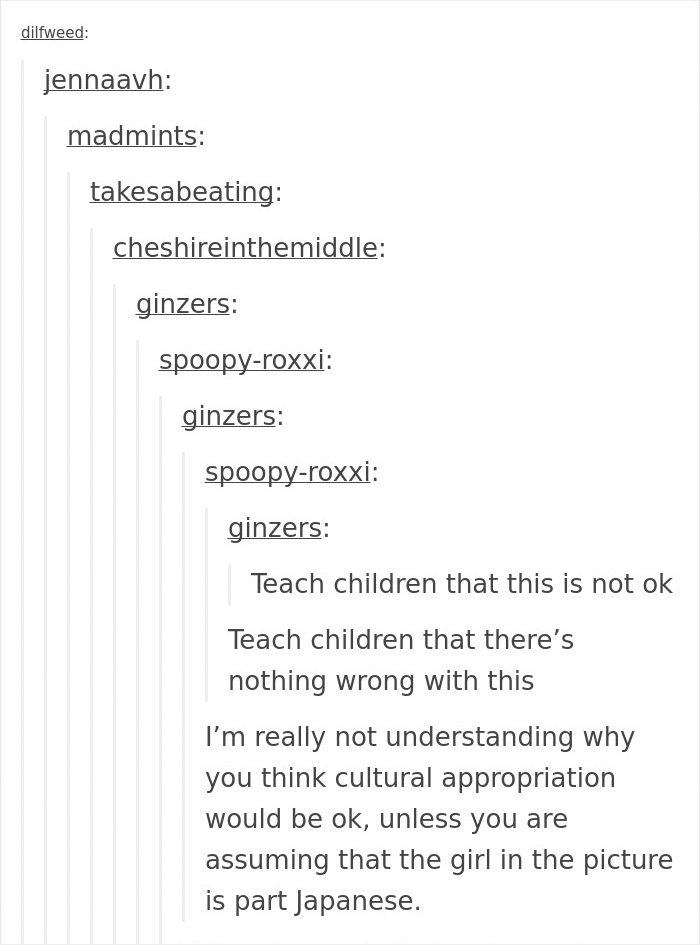
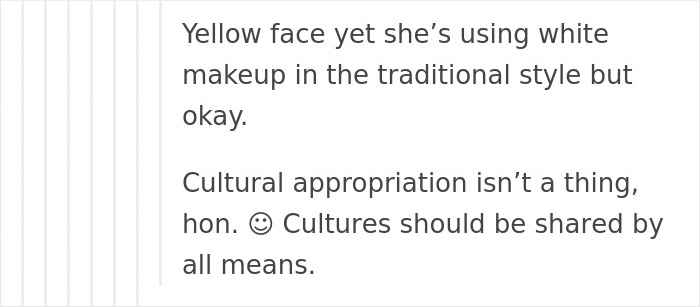
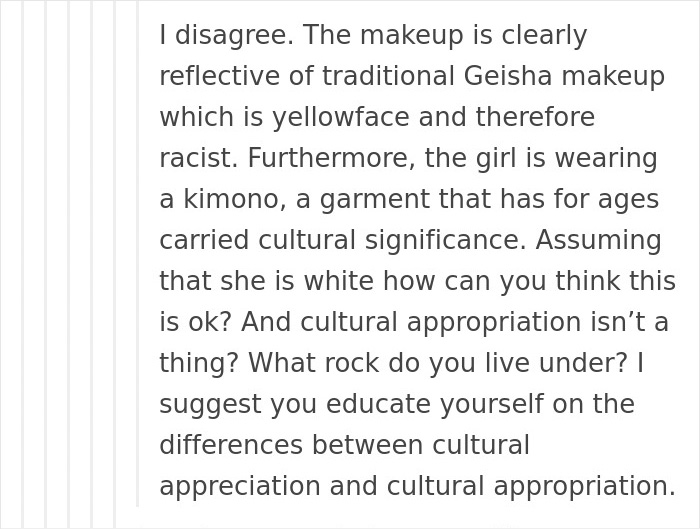
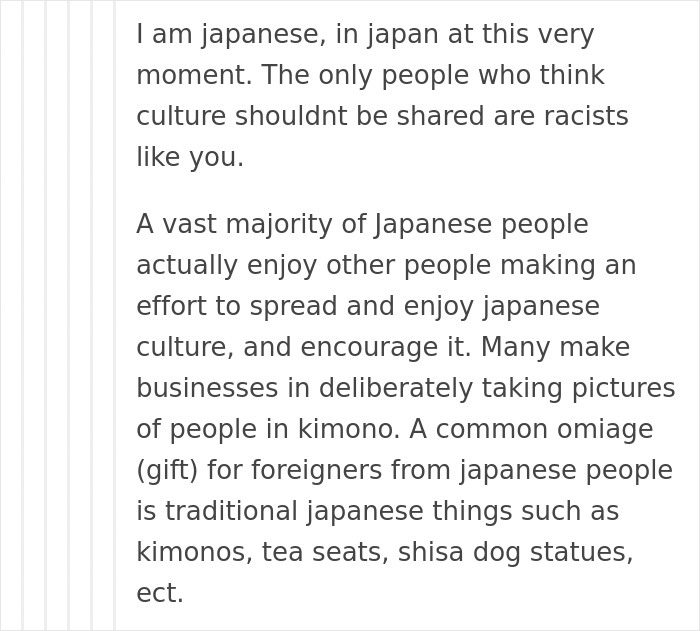
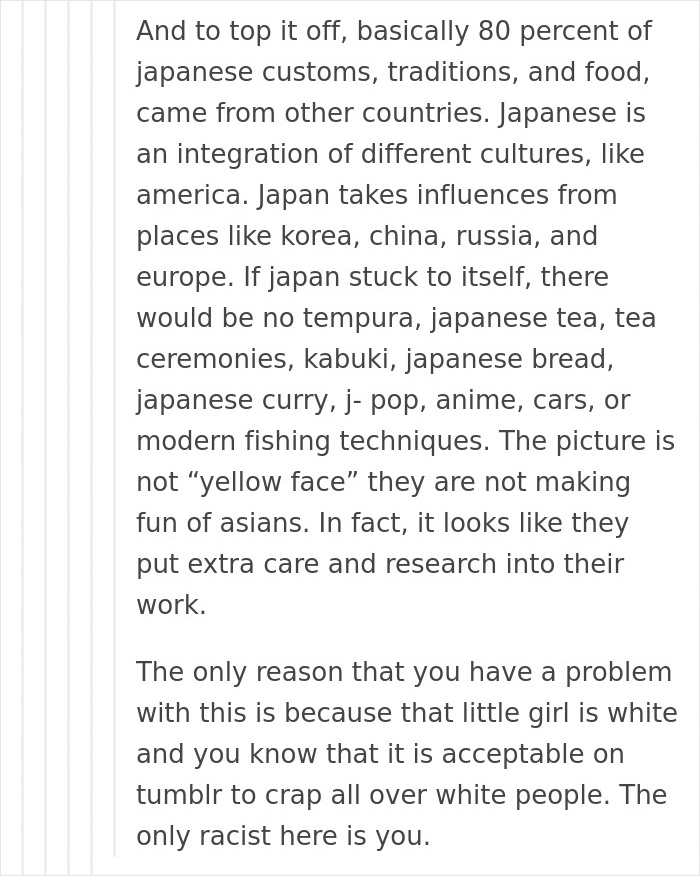
The poster lost me a little with “crap all over white people.” IT’s a little reductionist but other than that…. Dayum! They laid down some truth!
The California judge, who temporarily blocked the order in April, ruled that it was a violation of constitutional rights and separation of powers.
US Judge permanently blocks Trump’s sanctuary city order – BBC News
hmmmmm
U.S. plans to end temporary residency permit program for Haiti – CBS News
sigh…. Trump hates on brown people. Yet again.
Hatred of outsiders has been a cyclical thing in America, and we seem to be in such a cycle now. Economic and social insecurity fuels bigotry, and new forms of communication — the internet, especially — helps it spread. But psychologists and sociologists over the last few decades have begun to understand the qualities that make a person susceptible to what was once called “xenophobia,” meaning fear of outsiders — a useful term that perhaps deserves to be resurrected in Trump-era America. And understanding how people are recruited into hate is a first step in combating it.
What makes someone a white nationalist?
hmmm
The Department of Homeland Security’s head of outreach to religious and community organizations resigned on Thursday after audio recordings revealed that he had previously made incendiary remarks about African-Americans and Muslims while speaking on radio shows.
…John F. Kelly, the White House chief of staff, had appointed Mr. Johnson to the department in April during his brief tenure as secretary of Homeland Security.
…[Johnson said on a radio show] that the black community had “turned America’s major cities into slums because of laziness, drug use and sexual promiscuity.” He also said black people were anti-Semitic because they were jealous of Jewish people..
…Mr. Johnson attacked Islam, …“Muslims want to cut our heads off,” that Islam is “an ideology posing as a religion” and that President George W. Bush made a mistake by calling it a religion of peace.
…Mr. Johnson also said he agreed with the conservative author Dinesh D’Souza that “all that Islam has ever given us is oil and dead bodies over the last millennia and a half.”
…“The DHS Center for Faith-Based and Neighborhood Partnerships is driven by one simple, enduring, inspirational principle,” Mr. Johnson wrote on his account’s inaugural post eight months ago. “LOVE THY NEIGHBOR.”
Kelly appointed a bigot to an office in charge of outreach to minority groups. Sadly, this isn’t a surprise. At least he was outed and pushed out.
 Comments From The Peanut Gallery