Humans didn’t outsmart the Neanderthals. We just outlasted them. – The Washington Post
hmmm
What goes through my my mind when I read the news with my morning coffee. …Or for the Simon's Rockers in the group, this is my response journal.
Referencing the Book of Joshua, EPA head Scott Pruitt announced sweeping changes to the agency’s science advisory boards, opening the door to more input from the business world.
Citing The Bible, The EPA Just Changed Its Rules For Science Advisers
Oh good lord…
The verses in question concern the passage in which Joshua leads the Israelites into Canaan. “Sun, stand still at Gibeon, and moon, in the Valley of Aijalon. And the sun stood still, and the moon stopped,” the text reads.
The meaning had been lost in English renderings, but recent translations by Professor Sir Colin Humphreys suggest they reference an eclipse. “Going back to the original Hebrew text, we determined that an alternative meaning could be that the sun and moon just stopped doing what they normally do: They stopped shining. In this context, the Hebrew words could be referring to a solar eclipse,” Humphreys explained.
By reading the hieroglyphs carved in the granite Merneptah Stele, an Egyptian text dating from the reigns of Pharaoh Merneptah and his son Ramesses the Great, historians were able to date the Israelites’ presence in Canaan to between 1500 B.C. and 1050 B.C.
The breakthrough in comparing the two texts was made by backdating not only total solar eclipses using astronomical patterns but also annual eclipses in which the sun does not completely cover the moon but creates a distinctive ring of fire. From the calculations, which took into account the fluctuations in Earth’s orbit and rotation, Humphreys and his team posited that the only annual eclipse that could have taken place while the Israelites were in Canaan occurred in 1207 B.C.
Wild!
Ocean plastic is an indiscriminate hazard. It harms fish and kills seabirds, which wash up with bellies full of trash. Turtles swallow it because, the thinking goes, they mistake the floating waste for jellyfish. Less well known are the ways plastic damages the ocean’s smaller inhabitants, plankton and corals, which sometimes are found with particles wedged in their teeny guts.
…Savoca also didn’t expect corals to prefer plastic. In 2016, he and his colleagues reported that seabirds were attracted to smelly, bacteria-covered plastic, and he recently demonstrated that anchovy fish swarm around the odor of fouled plastic.
“We need to be thinking about the taste of plastic as a paradigm,” Seymour said, “not just a problem for corals.”
…Yet there is no question that plastic has penetrated the ocean, and even its remotest corner is not beyond human influence. Robot submersibles have spotted plastic bags on slopes leading to the Mariana Trench, the deepest part of the Pacific. Where no explorer will ever plant a flag or footprint, there is already plastic.
Corals eat plastic because we’ve made it tasty, study suggests – New Haven Register
Sigh….
Phenomenon may be part of a mysterious wider trend.
Dozens of Octopuses Crawl From The Sea In Wales In ‘End of Days’ Beach Scene
wild!
Researchers have captured the first atomic-level images of finger-like growths that trigger battery fires.
…In a lithium-ion battery, dendrites can grow under some charging conditions and cause short circuits. Researchers have already known of the growth of the dendrites inside the batteries. But until now, they have not been able to get atomic-scale images of dendrites or other sensitive battery parts. To their surprise, dendrites are crystalline, not the irregular shaped depicted in previous electron microscope shots.
Researchers not only looked at the structure of dendrite but also at a coating called SEI that develops as the dendrite reacts with the surrounding electrolyte. The new technique also revealed the locations of individual atoms in both the crystal and its SEI coating.
“We were really excited. This was the first time we were able to get such detailed images of a dendrite, and we also saw the nanostructure of the SEI layer for the first time,” said Yanbin Li from Stanford. “This tool can help us understand what different electrolytes do and why certain ones work better than others.”
Scientists Finally Figure Out Why Batteries Explode
Wild.
Instead, she refers to an early 1900s classified ad from polar explorer Ernest Shackleton, which applies equally to both sexes. “Men wanted for hazardous journey, small wages, bitter cold, long months of complete darkness, constant danger, safe return doubtful, honor and recognition in case of success.”
Getting to and living on Mars will be hell on your body
wild
The first modern humans may have emerged up to 350,000 years ago—170,000 years earlier than previously thought. Analysis of ancient DNA has allowed scientists to trace back the ancestry of people from South Africa to determine when our ancestors split from other hominin species. Their findings consistently point to an early date of divergence, between 350,000 and 260,000 years ago.
…Their dating estimates also fit with the fossil record. At least two or three other Homo species are known to have lived in southern Africa during this time. Furthermore, these dates with recent fossil evidence uncovered in Morocco. Scientists found remains from five Homo sapiens individuals that date back to 300,000 years, raising major questions about where the “cradle of humanity” really was.
Study author Carina Schlebusch, also from Uppsala University, said: “Both paleo-anthropological and genetic evidence increasingly points to multi-regional origins of anatomically modern humans in Africa, i.e. Homo sapiens did not originate in one place in Africa, but might have evolved from older forms in several places on the continent with gene flow between groups from different places.”
Ancient Fossils Reveal the First Humans Emerged 170,000 Years Earlier than We Thought
hmmm
When the Trump administration elected to stop requiring many employers to offer birth-control coverage in their health plans, it devoted nine of its new rule’s 163 pages to questioning the links between contraception and preventing unplanned pregnancies.
…Multiple studies have found that access or use of contraception reduced unintended pregnancies.
…“We know that safe contraception -and contraception is incredibly safe- leads to a reduction in pregnancies,” said Michele Bratcher Goodwin, director of the Center for Biotechnology and Global Health Policy at the University of California, Irvine, School of Law. “This has been data that we’ve had for decades.”
…The government also said imposing a coverage mandate could “affect risky sexual behavior in a negative way” though it didn’t point to any particular studies to support its point. A 2014 study by the Washington University School of Medicine in St. Louis found providing no-cost contraception did not lead to riskier sexual behavior.
Trump Officials Dispute the Benefits of Birth Control to Justify Rules – Bloomberg
I don’t know whether to post a Handmaiden’s Tale meme or Liar, Liar Pants of Fire one….
Icarda’s most vital project — a seed bank containing 155,000 varieties of the region’s main crops, a sort of agricultural archive of the Fertile Crescent — faced extinction.
But the researchers at Icarda had a backup copy. Beginning in 2008, long before the war, Icarda had begun to send seed samples — “accessions” as they are called — to the Svalbard Global Seed Vault, the so-called doomsday vault, burrowed into the side of a mountain on a Norwegian island above the Arctic Circle. It was standard procedure, in case anything happened.
War happened. In 2015, as Aleppo disintegrated, Icarda’s scientists borrowed some of the seeds they had stored in Svalbard and began building anew. This time, they spread out, setting up one seed bank in Morocco and another just across Syria’s border with Lebanon in this vast valley of cypress and grapes known as the Bekaa.
…Mr. Shehadeh says, [he] is why he is obsessed with the wild relatives of the seeds that most farmers plant today. He eschews genetically modified seeds. He wants instead to tap the riches of those wild ancestors, which are often hardy and better adapted to harsh climates. “They’re the good stock,” he said.
He hunts for the genetic traits that he says will be most useful in the future: resistance to pests or blistering winds, or the ability to endure in intensely hot summers. He tries to select for those traits and breeds them into the next generation of seeds — in the very soil and air where they have always been grown.
…Icarda’s entire collection houses seeds that have sustained the people of the Middle East for centuries, including some 14,700 varieties of bread wheat, 32,000 varieties of barley, and nearly 16,000 varieties of chickpea, the key component of falafel. The Lebanon seed bank houses about 39,000 accessions, and Morocco, another 32,000. Most of it is backed up in Svalbard.
In Sudan, Icarda has introduced a wheat variety it hopes will be more resistant to drought and heat. It is breeding a fava bean variety that can withstand a parasitic weed and lentils that can mature in a short growing season.
~~~~~
hmmmmm
The Senate Environment and Public Works Committee voted 11-10 to advance Michael Dourson’s nomination.
Senate panel advances Trump’s controversial EPA chemical pick | TheHill
Apparently the Congressional GOP hates your children and the thought they have a planet to live on too.
Costs are expected to rise as devastating storms, floods, wildfires and droughts become more frequent in the coming decades
Government Accountability Office says climate change already costing U.S. billions – CBS News
Sigh….
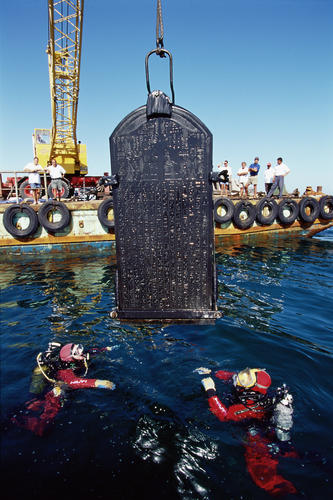
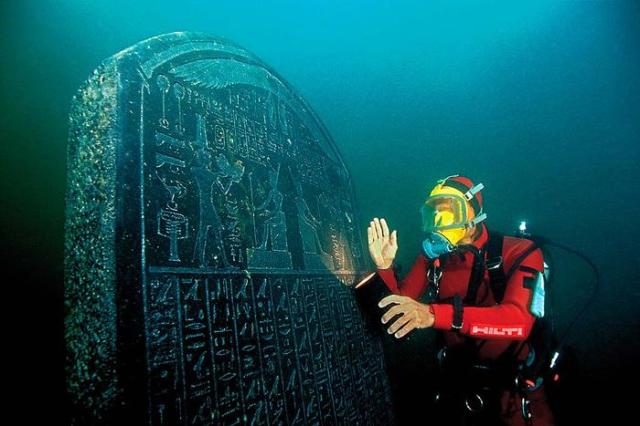
Off the coast of Egypt divers have discovered something that was thought to be lost a long time ago. It was said that the ancient city of Heracleion was lost under the sea for good. Well 1200 years later, off the bay of Aboukir, this ancient city has finally been discovered. The city dates back to the 6th century B.C. and holds some of the most beautiful artifacts you could imagine. Things like grand statues of gods and goddesses standing well over 15 feet tall and carved out of red granite, treasures of gold and rare stones, elaborate temples and enormous tablets. 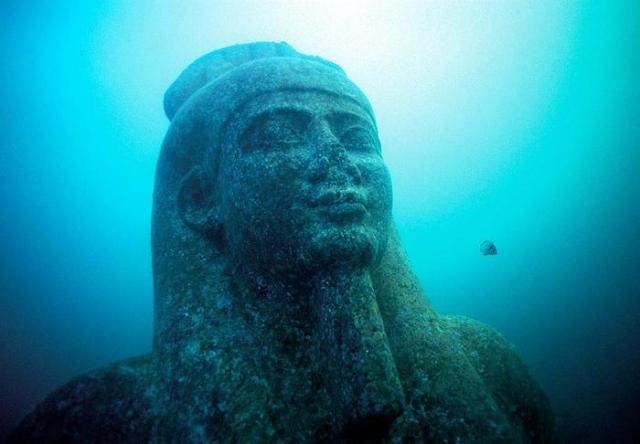
wild
AAaaaaaaaaaaaaaaaaaaaaagggggggggggggggggggggggghhhhhhhhhhhhhhhhhhhhhhhhhhhhhhhhhhhhhhhhhhhhhhhhhh
Only two chicks survived in a colony of 36,000 in a “catastrophic” breeding season in east Antarctica.
Penguins die in ‘catastrophic’ Antarctic breeding season – BBC News
hmmm
Black carbon trapped in the feathers of songbirds gives new insight into historic US air quality.
‘Sooty birds’ reveal hidden US air pollution – BBC News
hmmm
But just saying NASA is going to do something isn’t enough for the space agency to actually accomplish a task. Ambitious programs require extra money and sustained commitment from Congress in order to become a reality.
…Either Congress can raise NASA’s budget by billions of dollars each year, or the space agency can rework its existing programs to free up funds for technology development. But such changes aren’t easy to implement, and it’s unclear which route the new administration will take in order to follow through on Pence’s bold proclamation.
If Mike Pence wants to send NASA back to the Moon, he has to find funds – The Verge
hmmm
This is the first time scientists have observed a hole of this magnitude since the 1970s.
Hole the Size of Maine Opens in Antarctica Ice
whoa!
Haumea was [recognized] by the International Astronomical Union in 2008 and is one of five dwarf planets, alongside Pluto, Ceres, Eris and Makemake. They are located beyond Neptune – 50 times farther away from the sun than Earth.
Haumea, named after the Hawaiian goddess of childbirth, is unusual because of its elongated shape, comparable to a rugby ball, and its rapid rotation, spinning around once every 3.9 hours. Its diameter is approximately a third of the size of Earth’s moon.
“Dwarf planets are unique by themselves but Haumea is even more special among them,” said Ortiz “It also has two moons, a large and a small one, and the larger one turns out to be in the same plane as the ring we found.”
Scientists discover ring around dwarf planet Haumea beyond Neptune | Science | The Guardian
hmmmm
Collaboration between museums and indigenous groups provides educational opportunities, archival documentation—and ethical dilemmas
hmmm
The enormous break comes just 2 months after a piece of ice nearly the size of Delaware split from Antarctica.
Iceberg that broke off Antarctica was 4 times the size of Manhattan – CBS News
Agggghhhhh!
A little gadget could make you look smart, rich, and tech-savvy—all without necessarily fulfilling its real function
Early Tech Adopters in Ancient Rome Had Portable Sundials | Innovation | Smithsonian
wild
Because the Black Sea contains almost no light or oxygen, little life can survive, meaning the wrecks are in excellent condition.
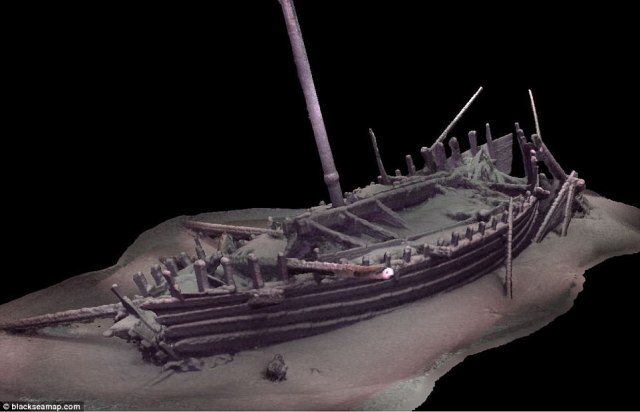
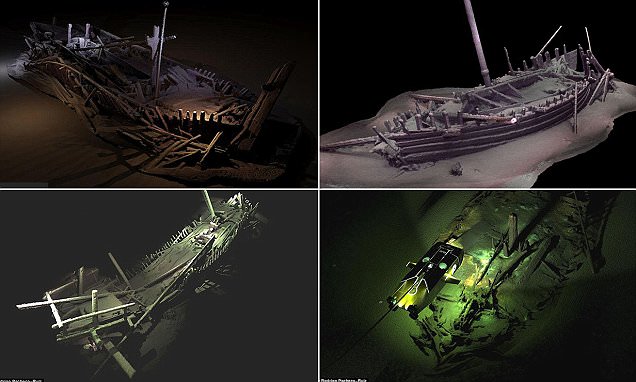
Researchers say their discovery is ‘truly unrivalled’. Many of the ships have features that are only known from drawings or written description but never seen until now. Carvings in the wood of some ships have remained intact for centuries, while well-preserved rope was found aboard one 2,000-year-old Roman vessel.
…Most of the vessels found are around 1,300 years old, but the oldest dates back to the 4th Century BC.
Many of the wrecks’ details and locations are being kept secret by the team to ensure they remain undisturbed.
…Among the wrecks are ships from the Roman, Ottoman and Byzantine Empires, which provide new information on the communities on the Black Sea coast.
…Many of the colonial and commercial activities of ancient Greece and Rome, and of the Byzantine Empire, centred on the Black Sea.
After 1453, when the Ottoman Turks occupied Constantinople – and changed its name to Istanbul – the Black Sea was virtually closed to foreign commerce.
Experts find graveyard of 60 preserved ancient shipwrecks | Daily Mail Online
amazing, can’t wait to see more findings from this project.
 Comments From The Peanut Gallery