New Hampshire’s drug treatment infrastructure still lags, but is growing rapidly

New Hampshire’s drug treatment infrastructure still lags, but is growing rapidly

New Hampshire’s drug treatment infrastructure still lags, but is growing rapidly

More drug treatment infrastructure is a good thing but I hope leadership in the Granite State is helping to provide a path to healing, empowerment, and positive participation in society.

As opposed to, say, an endless rotary between fixes and debilitating dependence.

Politics of pain: Drugmakers fought state opioid limits amid crisis 

Makers of prescription painkillers have tried to weaken state measures aimed at stemming the opioid crisis that has killed 165,000.

Politics of pain: Drugmakers fought state opioid limits amid crisis | Center for Public Integrity

Opioid prescriptions: the true gateway drug to a life of addiction.

Police release shocking footage of toddler trying to revive mother after drug overdose 

Buried at the end of a puff piece, some salient facts:

More than 28,000 people died from opioid overdoses in 2014, more than any other year on record. At least half of all opioid overdose deaths involve a prescription opioid.

Obama …committed to reducing overdose deaths and will continue to push Congress to provide $1.1 billion to widen access to treatment services.

…A report by the Center of Public Integrity and Associated Press, published Wednesday, revealed that pharmaceutical giants had spent $880 million on lobbying against opioid restrictions and campaign contributions from 2006 up to 2015.

Police release shocking footage of toddler trying to revive mother after drug overdose (VIDEO) — RT America

Sigh…

First study to explore language and LSD since the 1960s: New study shows LSD’s effects on language — ScienceDaily

“Results showed that while LSD does not affect reaction times,” explains lead author Neiloufar Family, “people under LSD made more mistakes that were similar in meaning to the pictures they saw.” For example, when people saw a picture of a car, they would accidentally say ‘bus’ or ‘train’ more often under LSD than under placebo. This indicates that LSD seems to effect the mind’s semantic networks, or how words and concepts are stored in relation to each other. When LSD makes the network activation stronger, more words from the same family of meanings come to mind.

First study to explore language and LSD since the 1960s: New study shows LSD’s effects on language — ScienceDaily

hmmm

Kenyon: Lebanon Pot Policy a Bust

Under the 2013 New Hampshire law that was finally implemented this year, it’s likely that Sevigny and Cardinale would be eligible to use medicinal marijuana, which they preferred as a benign alternative to prescription painkillers. But getting a medical marijuana license can be a lengthy process. Cardinale’s situation was further complicated because he receives his health care at the VA Medical Center in White River Junction. Since federal law still doesn’t allow for the medical use of marijuana, his VA physician couldn’t prescribe it.

…Twomey contacted Lebanon prosecutor Ben LeDuc, who was willing to reduce the charges to a violation. Cardinale and Sevigny would still have to each pay a $500 fine, but they’d avoid a criminal record.


…It was probably the best that Sevigny and Cardinale could have hoped for. As long as Lebanon cops continue their war on drugs, LeDuc is in a tough spot. He’s a one-man prosecutor’s office, with more than 1,000 cases (not all drug-related) a year coming across his desk. He doesn’t have a lot of time to exercise discretion.

After taking the job last year, LeDuc made it his policy to offer first-time offenders the same deal that he gave Cardinale and Sevigny.


…In the upcoming months, Twomey will help draft proposed legislation to revise the state’s marijuana laws, which has become something of an annual exercise that dies in the state Senate. 

Kenyon: Lebanon Pot Policy a Bust

hmmm

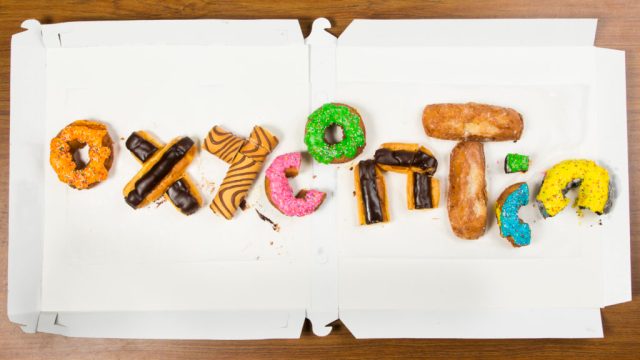
Secret trove reveals Abbott’s bold ‘crusade’ to sell OxyContin

Internal documents obtained by STAT show the lengths to which Abbott Laboratories went to hook in doctors and make OxyContin a billion-dollar blockbuster.

Secret trove reveals Abbott’s bold ‘crusade’ to sell OxyContin

This! Gawdayumit! This!

No one should ever speak of addressing the opioid crisis without focusing on THIS!!!

The Suboxone Problem No One is Talking About | Hazelden Betty Ford Foundation

A majority of halfway and recovery houses refuse to accept people that are on buprenorphine. As a result, people in early recovery are often faced with the decision to either: stay on buprenorphine and be homeless or live in a dangerous environment; or, rapidly or immediately quit buprenorphine in order to live in a safe environment and be accepted in the rooms.

The Suboxone Problem No One is Talking About | Hazelden Betty Ford Foundation

Suboxone prolongs and deepens [as opposed to curing or alleviating] the addiction, but still, this should not be happening to people trying to do well by themselves.

So You Thought You Could Get Off Suboxone? 

Why is there no official medical protocol to detox addicts off of Suboxone? The Fix goes to the pharmaceutical companies for answers.

It’s jarring to see a press release referring to opiate addiction as a high competition market for pharmaceutical companies. That, however, is the case, and the heart of the issue when it comes to understanding why Big Pharma enthusiastically went after the market in 2002.

…In the United States accurate data is also hard to come by. WHO estimates the number of opiate addicts (including heroin) to be two million. Figures from The National Alliance of Advocates for Buprenorphine Treatment (NAABT) puts that figure at 5.5 million. …The Center For Disease Control (CDC) reports opioid analgesic consumption increased 300% between 1999 and 2010, and death rates for poisoning involving opioid analgesics more than tripled between 2000 and 2010. 

[In 2013] Suboxone had sales of $1.2 billion. …To give this sum context, Suboxone revenue is three times that of Super Bowl advertiser/provocateur Go Daddy. …In the U.S. more revenue was generated by Suboxone sales than the entire digital music download business. 

…Some patients who have been prescribed the drug decide they want to discontinue it. The reasons vary, ranging from financial pressures arising out of the cost of doctor visits and medication to side effects, potential future side effects and finally, the patient who wants to be 100% drug free.

The medication’s long half-life combined with its tight adhesion to opiate receptors makes tapering particularly difficult. From anecdotal reports, the least disruptive way to achieve a Suboxone-free life is to cut down the amount used very slowly week by week until titration is complete.

This scenario is complicated by two facts:

  • The lowest strength Suboxone comes in is 2 mg. (”Jumping” from a 2 mg dose can be a drawn out and debilitating process that takes months to recover from);
  • RBP warns against cutting Suboxone strips into smaller amounts, and maintains that the medication is not equally distributed in the preparation.

If you ask the doctor who has been prescribing you the drug for months or years, you may find him/her woefully lacking in experience or a plan for tapering.

…While there are lower strength formulations of buprenorphine on the market (that would make tapering a more simple and accurate process) they are created for pain management and are illegal to prescribe to recovering addicts. Physicians routinely prescribe medications for “off label” use, but there are many laws directed towards prescribers of buprenorphine and they have serious repercussions. A doctor could lose his/her license for prescribing a Butrans patch to help taper a patient off of Suboxone.

Getting certified to prescribe buprenorphine is remarkably easy. It requires completion of one eight hour online course. The amount of time in the course agenda dedicated to taking patients off off the drug is nil. No doctor I spoke with recalled the topic of withdrawal from Suboxone being mentioned during the certification process.

So You Thought You Could Get Off Suboxone? | The Fix – Page 0

The article has a bit of a paranoid bent to it but still, fascinating stuff.


U.S. will affirm its prohibition on medical marijuana 

The Drug Enforcement Agency will allow more places to grow marijuana for research purposes

U.S. will affirm its prohibition on medical marijuana – The Washington Post

No rescheduling it is an expensive drain on tax payer resources that benefits no one except big pharma, big oil, and alcohol producers. Not to mention that it is disproportionately affects lower income people and -in effect- diverts hundreds of thousands of young people away from school and a career and into a lifetime of a being tax-payer drain member of the American Injustice System school instead.

It also hampers medical research and goes against the supposed position the President took on letting states make their own laws.

The DEA, like most law enforcement agencies in this country, is wholly out of step with society and its stated purpose.

Boo, Mr President!

Is Suboxone a Wonder Drug that Helps Heroin Addicts Get Clean–Or Just Another A Transference of the Underlying Addiction?

The experience of detoxing left Chris with mixed feelings about Suboxone. “On the one hand, it is a good thing,” he says. “It keeps people from stealing and robbing and overdosing. But it really just masks the issue: the addiction. From heroin withdrawals, you move onto Suboxone, and then you have to go through those withdrawals. It’s something that’s going to happen, but a lot of us choose to prolong it.

“In the longer term, he adds, the drug also made him feel “like total shit.”

“My girl always says I couldn’t even formulate sentences,” he explains. “I was not articulate. I couldn’t fuck her, excuse my language. I was just totally like a zombie. And then my feet were constantly uncomfortable. I couldn’t sleep without it. My eyeballs would turn into like these huge dishes, big pupils like Mickey Mouse.”

To his dismay, Chris realized that he initially felt even worse when trying to pull back on the Suboxone than when he experienced heroin withdrawal. “You’re exhausted for a very long time. It takes forever to get out of your system,” he says.

“On the other hand,” Bisaga adds, “you do hear the stories of the pharmaceutical industry pushing people to stay on as much medication as possible. Depending on where you stand in this conversation, you can hear arguments on both sides. We rely on science and effective treatments, and we’d like patients to make informed decisions on their future.”

….Saltzman says some of her patients are, for all practical purposes, on the drug permanently, but she doesn’t encourage it. “I don’t like that idea. It’s not a healthy way to live,” she says. “To me it speaks to someone not wanting to look at themselves.”

Is Suboxone a Wonder Drug that Helps Heroin Addicts Get Clean–Or Just Another Way to Stay High? | Village Voice

hmmmm

Dying To Be Free – The Huffington Post

To enter the drug treatment system, such as it is, requires a leap of faith. The system operates largely unmoved by the findings of medical science. Peer-reviewed data and evidence-based practices do not govern how rehabilitation facilities work. There are very few reassuring medical degrees adorning their walls. Opiates, cocaine and alcohol each affect the brain in different ways, yet drug treatment facilities generally do not distinguish between the addictions. In their one-size-fits-all approach, heroin addicts are treated like any other addicts. And with roughly 90 percent of facilities grounded in the principle of abstinence, that means heroin addicts are systematically denied access to Suboxone and other synthetic opioids.

…While medical schools in the U.S. mostly ignore addictive diseases, the majority of front-line treatment workers, the study found, are low-skilled and poorly trained, incapable of providing the bare minimum of medical care. These same workers also tend to be opposed to overhauling the system. As the study pointed out, they remain loyal to “intervention techniques that employ confrontation and coercion — techniques that contradict evidence-based practice.”

…Chrysalis House …has more success than most, with about a 40 percent dropout rate, administrators said, but among those who complete the program, roughly half will relapse within a year. Many, if not all, had previous treatment stays.

…What addicts face is a revolving door, an ongoing cycle of waiting for treatment, getting treatment, dropping out, relapsing and then waiting and returning for more.

…The squeeze of regulation has left the door open for more opportunistic forces, such as cash-only clinics and shady doctors. A vibrant black market has sprung up. 

…Even for doctors trained in addiction medicine — motivated to treat opioid addicts with buprenorphine and able to work within Medicaid’s numerical limits — there are still roadblocks. Kentucky’s Medicaid program, like those of many other states, requires prior authorization before it agrees to pay for the medication. One managed care organization mandates such authorization every month. And negotiations, Kalfas said, can take an illogical turn: Medicaid has tried to deny payment for Suboxone if a patient has failed a drug test while it has also used clean tests to deny payment. Why pay for Suboxone for a drug-free patient?

…Addicts going outside Medicaid face potentially prohibitive costs. At Droege House, a publicly subsidized detox center in Northern Kentucky operated by Transitions, Inc., addicts must pay $410 up front if they want Suboxone and additional fees depending on whether they enroll in an outpatient or a residential program. It can end up costing them thousands of dollars. Laura Duke, who was recently the detox unit’s supervisor, said the cost put the medication out of reach for all but 1 to 2 percent of the addicts she saw.

Dying To Be Free – The Huffington Post

hmmmm

Jeanne Shaheen on the Opioid Crisis – at the DNC

(Keep in mind, while she reels off the number of deaths, that entire population of the state is somewhere around 1.3 million.)

A solid assessment of the crisis, Senator.

I would add that many treatment centers shift the addiction to methadone, which is not a permanent fix. If an addict doesn’t have access to a daily doses they have to rely on illegal drugs again.

We need to investigate and offer non-opioid treatments for opiate addiction.

I would also add that so many of these stories of heroin and other opiod addiction/overdose stories start with medically-prescribed, heavy doses of opiod based drugs.

We need to cut that pipeline off and make not-addictive pain killer options available from the get-go.

(Pssst, I’m referring to medical MJ,ladies…)