
Originally found in the remains of a shipwreck of an ancient merchant ship that is believed to have sunk between 150-70 BC…
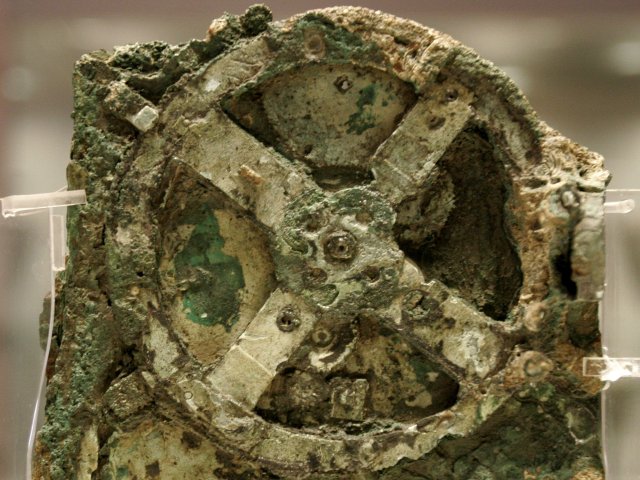
[In] 1902 when Valerios Stais, the Director of the National Archaeological Museum in Athens, took notice of the great embedded in a rock. Stais believed it to be an astronomical clock, which was dismissed due to the preconceptions of technology only adapting to be able to make such equipment in the 14th century.
“It’s like a textbook of astronomy as it was understood then, which connected the movements of the sky and the planets with the lives of the ancient Greeks and their environment.”
cool.
 Comments From The Peanut Gallery